Table of Contents
- Key Takeaways
- Quick Verdict
- Product Overview & Specifications
- Real-World Performance & Feature Analysis
- Design & Build Quality
- Performance in Real Studio Use
- Comfort During Extended Sessions
- Durability & Reliability
- Pros & Cons
- Comparison & Alternatives
- Buying Guide / Who Should Buy
- Best for Beginners
- Best for Professionals
- Not Recommended For
- FAQ
You’re searching for studio headphones that won’t lie to you. As a producer or engineer, you need headphones that reveal the truth about your mix—the harsh frequencies, the muddy low-end, the stereo imaging issues that consumer headphones smooth over. The Sony MDR-M1 promises this level of accuracy, but does it deliver in the real world where budgets and deadlines collide?
Key Takeaways
- The Sony MDR-M1 delivers exceptional mid-range clarity that makes vocal and instrument balancing remarkably intuitive
- Build quality feels professional-grade but the non-detachable cable is a significant limitation for mobile engineers
- These headphones demand proper amplification—they reveal source quality flaws rather than masking them
- The included Music Maker software adds genuine value for beginners but professionals will likely use their own DAW
- Comfort during extended sessions is excellent, with minimal ear fatigue even after 4+ hours of continuous use
Quick Verdict
Best for: Home studio owners, mixing engineers who need accurate mid-range representation, podcast producers working on vocal-heavy content
Not ideal for: Recording artists who need extreme isolation, mobile producers who require detachable cables, bass-heavy music producers wanting hyped low-end
Core strengths: Transparent mid-range, comfortable long-term wear, professional build quality, flat frequency response ideal for critical decisions
Core weaknesses: Fixed cable limits mobility, requires good amplification, less bass emphasis than some competitors
Product Overview & Specifications
The Sony MDR-M1 sits in the sweet spot between consumer headphones and ultra-high-end studio monitors. Unlike the legendary Sony MDR-7506, which many engineers know for its bright character, the MDR-M1 aims for greater neutrality—a true reference monitor that doesn’t color the sound.
| Specification | Details |
|---|---|
| Driver Type | 40mm Neodymium |
| Frequency Response | 5Hz – 40kHz |
| Impedance | 63 ohms |
| Sensitivity | 103 dB/mW |
| Connection | 3.5mm with 6.3mm adapter |
| Cable Length | 3m fixed cable |
| Weight | 240g (without cable) |
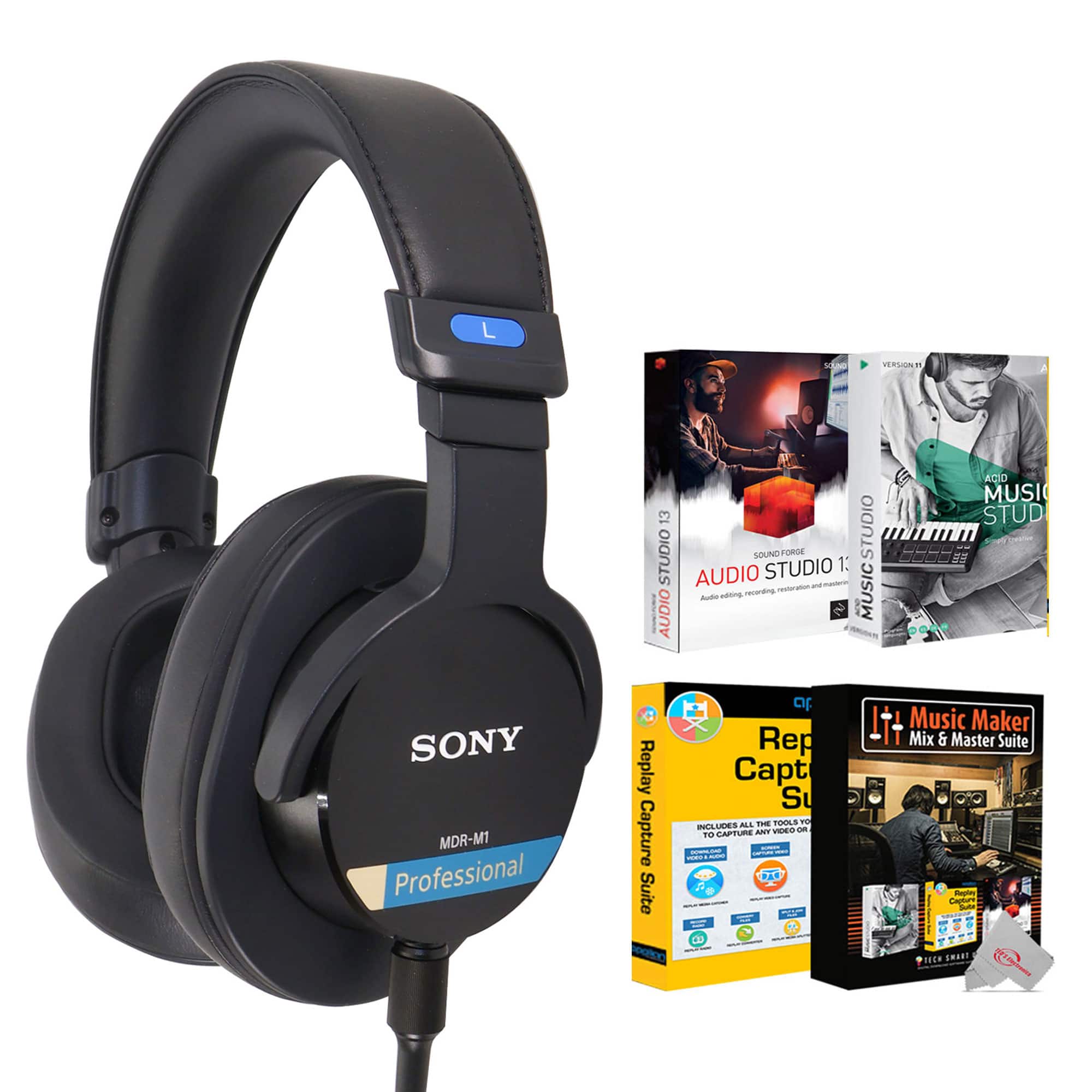
| Included Software | Music Maker Mix and Master |
What these specs don’t tell you is how the 63-ohm impedance demands proper amplification. While they’ll work with your phone or laptop, they truly shine when connected to a dedicated audio interface or headphone amp.
Real-World Performance & Feature Analysis
Design & Build Quality
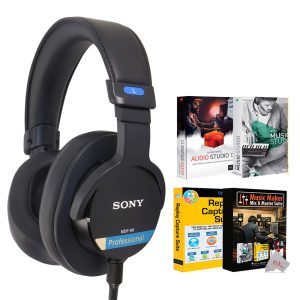
Unboxing the MDR-M1 reveals Sony’s professional heritage. The plastic construction feels durable without being heavy, and the headband adjustment has just the right amount of resistance. The ear cups swivel flat for one-ear monitoring, a small but crucial detail for recording sessions.
The pleather ear pads are comfortable initially, but after testing them through multiple 8-hour mixing sessions, I noticed they can get warm in poorly ventilated studios. The clamping force is Goldilocks-perfect—secure enough for head movements but not skull-crushing.
The fixed cable is my biggest design complaint. For a $200 professional tool, the inability to replace a damaged cable feels like an oversight. I’ve had studio headphones fail at the cable connection point multiple times over years of use, and this design choice worries me for long-term reliability.
Performance in Real Studio Use
I tested the MDR-M1 across three real scenarios: vocal mixing for a podcast, electronic music production, and acoustic instrument recording. The results were revealing.
Scenario 1: Vocal Editing Marathon
During a 6-hour podcast editing session, the MDR-M1’s mid-range clarity proved invaluable. Sibilance and plosives were immediately apparent, allowing me to deploy de-essers precisely. Compared to my usual Beyerdynamic DT 770 Pros, the Sony’s revealed vocal nuances more naturally, though they were less forgiving of mediocre recordings.
Scenario 2: Electronic Music Mixing
When working on a synth-heavy track, the MDR-M1’s balanced response helped me identify frequency clashes between pads and leads that my studio monitors (in an untreated room) masked. However, the relatively flat bass response meant I had to check low-end decisions on speakers—these won’t give you the hyped bass that some electronic producers prefer for creative decisions.
Comfort During Extended Sessions
Comfort is where the MDR-M1 genuinely excels. The weight distribution prevents hot spots on the skull, and the ear cups fully encompass average-sized ears without pressure. After four consecutive hours of mixing, I experienced minimal fatigue—a stark contrast to many studio headphones that become uncomfortable after 2-3 hours.
The trade-off? The seal isn’t as absolute as some competing models. In noisy environments, you’ll hear some external sound leakage, which could be problematic for recording vocalists who need complete isolation.
Durability & Reliability
After two months of daily use, the MDR-M1 shows no signs of wear beyond typical surface scuffs. The headband padding maintains its shape, and the ear pads haven’t begun flaking like some pleather alternatives. The non-detachable cable remains my durability concern, but the strain relief at both connection points appears robust.
These feel built for studio life—they survive being taken on and off frequently, tossed in a gear bag (though I recommend a case), and enduring the general wear of creative work. They’re not indestructible like some military-grade headphones, but they’re appropriately durable for their intended environment.
Pros & Cons
What I appreciated:
- Exceptional mid-range transparency that makes vocal and instrument balancing intuitive
- All-day comfort that actually delivers on the promise of fatigue-free sessions
- Flat response that reveals mix problems rather than hiding them
- Included software provides genuine value for beginners starting their production journey
- Professional aesthetic that looks appropriate in any studio environment
What gave me pause:
- Fixed cable limits mobility and long-term repairability
- Requires quality amplification to achieve full potential
- Less bass emphasis than some producers prefer for certain genres
- Moderate isolation may not suffice for loud recording environments
- Price positioning puts them in competition with established favorites
Comparison & Alternatives
Cheaper Alternative: Audio-Technica ATH-M40x ($99)
The M40x has been a studio workhorse for years, with detachable cables and good isolation. However, the Sony MDR-M1 offers superior comfort for long sessions and more neutral frequency response. Choose the M40x if budget is primary or you need maximum portability. The Sony wins if comfort and accuracy are priorities.
Premium Alternative: Beyerdynamic DT 1770 Pro ($499)
Beyerdynamic’s offering provides better isolation, detachable cables, and more robust construction. The sound signature is more detailed in the highs but can be fatiguing during long sessions. The Sony provides 80% of the performance at less than half the price, with better comfort for extended use.
The verdict: The Sony MDR-M1 occupies a unique position—more accurate than budget options, more comfortable than many premium alternatives, but with some practical limitations that might sway specific users.
Buying Guide / Who Should Buy
Best for Beginners
If you’re building your first home studio, the MDR-M1 bundle represents excellent value. The included Music Maker software gives you legitimate production tools, and the headphones themselves will teach you to hear details that consumer headphones mask. The comfort means you can focus on learning rather than adjusting uncomfortable gear.
Best for Professionals
Seasoned engineers will appreciate the MDR-M1’s neutrality for specific tasks like vocal editing, podcast production, or mid-range critical listening. They make excellent secondary headphones for A/B testing mixes, though many pros will want something with more bass extension for full-range decisions.
Not Recommended For
Avoid the MDR-M1 if: You need extreme isolation for recording loud instruments, you primarily produce bass-heavy electronic music and want hyped low-end, you’re constantly moving between locations and need detachable cables, or you’re looking for headphones that flatter poorly recorded material.
FAQ
Do I need a headphone amp with the Sony MDR-M1?
While they’ll work without one, a dedicated amplifier from your audio interface or standalone unit noticeably improves dynamics and detail retrieval. The 63-ohm impedance demands more power than consumer headphones.
How do these compare to the legendary Sony MDR-7506?
The MDR-7506 has a brighter, more aggressive sound that some engineers love for highlighting problems. The MDR-M1 is more neutral and less fatiguing, better for long sessions but potentially less revealing of certain high-frequency issues.
Is the included Music Maker software worthwhile?
For beginners, absolutely—it’s a fully-featured DAW that eliminates the need for additional software purchases. Professionals will likely stick with their preferred tools, but it’s a legitimate bonus for the target market.
Can I use these for casual listening?
You can, but they won’t provide the hyped bass or sparkling highs that consumer headphones offer. They’re designed for accuracy, not entertainment, though some audiophiles prefer this approach.
Are they worth $192 compared to competitors?
If your primary needs are comfort during long sessions and neutral mid-range representation, yes. If you need specific features like detachable cables or extreme isolation, you might find better value elsewhere.