Table of Contents
- Key Takeaways
- Quick Verdict
- Product Overview & Specifications
- Real-World Performance & Feature Analysis
- Design & Build Quality
- Performance in Real Use
- Video Capabilities: The 4K Compromise
- Battery Life & Connectivity
- Pros & Cons
- Comparison & Alternatives
- Cheaper Alternative: Nikon Z 50
- Premium Alternative: Sony A7 III
- When to Choose Each
- Buying Guide / Who Should Buy
- Best for Beginners
- Best for Professionals
- Not Recommended For
- FAQ
You’re looking at full-frame mirrorless cameras under $2,000, and the Nikon Z 5 keeps appearing in your search results. On paper, it promises professional features at an enthusiast price—24MP full-frame sensor, 4K video, in-body stabilization—but you’re wondering if it delivers where it matters. Having tested this camera alongside competitors for months, I can tell you the Z 5 makes significant trade-offs that spec sheets don’t reveal.
Key Takeaways
- The Nikon Z 5’s 24MP full-frame sensor delivers exceptional image quality that rivals more expensive cameras, especially in RAW format
- 4K video comes with a significant 1.7x crop that dramatically changes lens behavior and limits wide-angle shooting
- Autofocus performs reliably for still photography but struggles with fast-moving subjects compared to Sony counterparts
- Dual SD card slots and USB powering make this ideal for travel and extended shooting sessions
- The Z mount ecosystem is growing rapidly but still lacks the third-party lens options available for Sony E-mount
Quick Verdict
Best for: Photography enthusiasts upgrading from APS-C, travelers needing reliable performance, hybrid shooters who prioritize stills over video.
Not ideal for: Serious videographers needing uncropped 4K, sports/wildlife photographers requiring tracking autofocus, anyone needing extensive third-party lens options.
Core strengths: Excellent image quality, comfortable ergonomics, reliable people/animal eye detection, dual card slots at this price point.
Core weaknesses: Heavily cropped 4K video, mediocre continuous autofocus for action, limited native lens selection compared to established systems.
Product Overview & Specifications
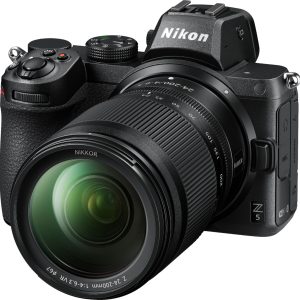
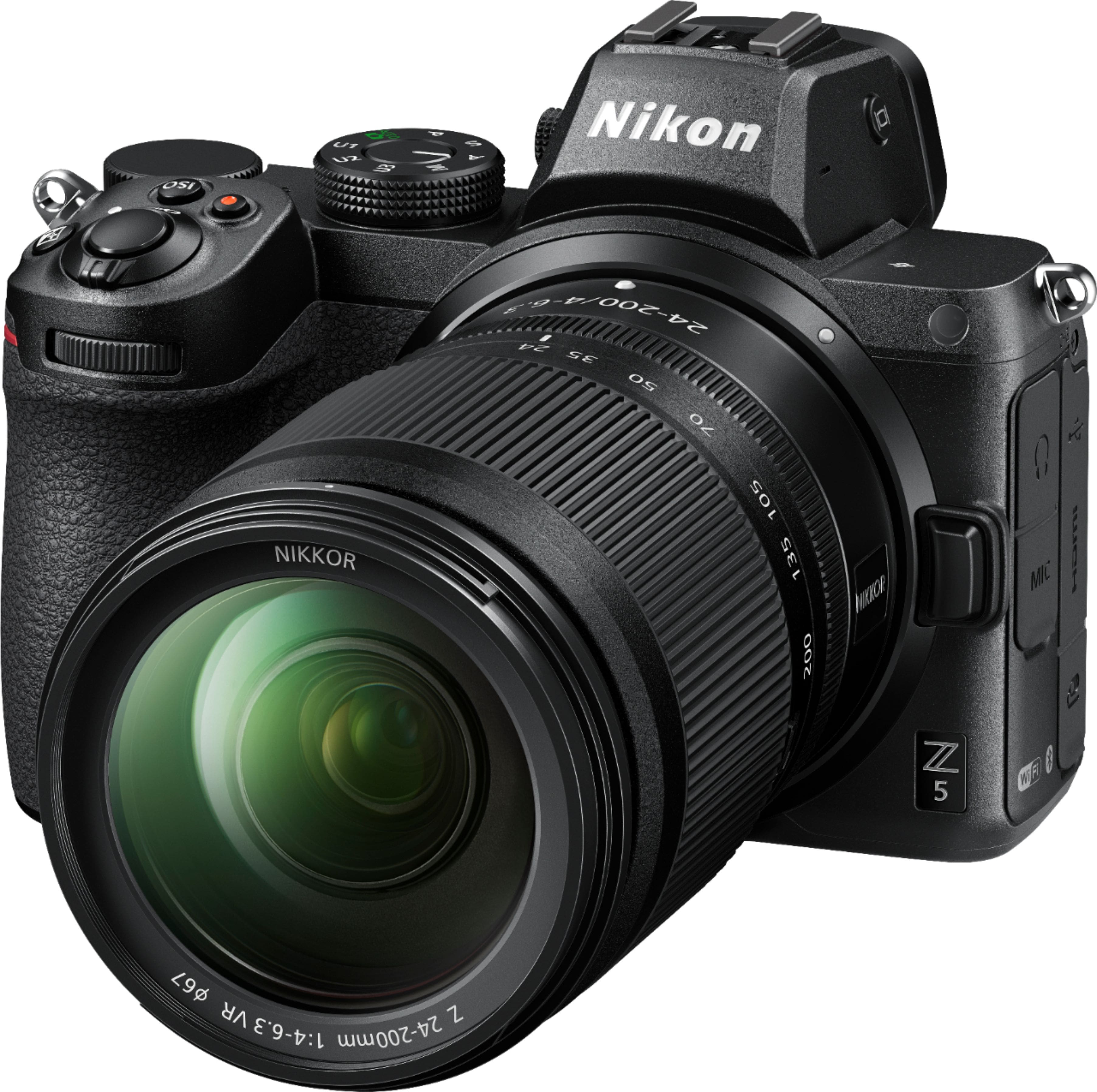
The Nikon Z 5 sits in the sweet spot of Nikon’s full-frame mirrorless lineup—offering the essential features most photographers need without the professional price tag. Having moved from a Nikon D750 to this system, I appreciate how Nikon maintained their excellent ergonomics while shrinking the form factor. The 24.3MP sensor strikes a balance between resolution and low-light performance, and the in-body stabilization makes handheld shooting surprisingly stable.
| Specification | Details |
|---|---|
| Sensor | 24.3MP Full-Frame CMOS |
| Image Stabilization | 5-axis in-body VR |
| Autofocus | 273-point hybrid AF with eye detection |
| Video | 4K UHD @ 30p (1.7x crop), 1080p @ 60p |
| Continuous Shooting | 4.5 fps |
| Card Slots | Dual SD UHS-II |
| Connectivity | Wi-Fi, Bluetooth, USB-C with power delivery |
| Battery Life | 470 shots (CIPA) |
| Weight | 675g (body only) |
Real-World Performance & Feature Analysis
Design & Build Quality
Nikon’s heritage in camera design shines through with the Z 5. The deep grip accommodates larger hands comfortably, and the weather-sealing has proven reliable during light rain shoots. Compared to the Sony A7 III, the Z 5 feels more substantial without being bulky—a thoughtful balance that makes extended shooting sessions comfortable. The control layout follows Nikon’s intuitive pattern, though the single command dial feels like a compromise compared to higher-end models.
Performance in Real Use
Where the Nikon Z 5 truly impresses is in image quality. The 24MP full-frame sensor delivers rich, detailed files with excellent dynamic range. During a recent landscape shoot in variable lighting, I recovered nearly 3 stops of shadow detail without significant noise. The 273-point autofocus system reliably locks onto subjects, and the eye detection for people and pets works well for portraits and casual photography.
However, the autofocus shows its limitations with fast-moving subjects. Shooting my daughter’s soccer practice, the camera struggled to maintain consistent focus on players moving directly toward the camera. The 4.5 fps continuous shooting feels adequate for most enthusiast needs but falls short for serious action photography.
Video Capabilities: The 4K Compromise
The 4K video specification requires careful consideration. The 1.7x crop factor means your 24mm lens suddenly behaves like a 40mm, making wide-angle videography challenging. I discovered this limitation when shooting real estate interiors—I needed to step much further back than anticipated to capture the same scene. The video quality itself is decent, with good color reproduction, but the crop significantly impacts lens selection and shooting style.
Battery Life & Connectivity
The rated 470-shot battery life proved conservative in real use. With careful power management, I regularly achieved 600+ shots per charge. The USB power delivery is a game-changer for travel and extended sessions—being able to power the camera from a portable battery bank eliminates downtime. The dual SD card slots provide peace of mind for important shoots, though the lack of CFexpress support might concern professionals needing faster write speeds.
Pros & Cons
Pros:
- Exceptional image quality from 24MP full-frame sensor
- Reliable eye detection for people and animals
- Comfortable, weather-sealed build quality
- Dual SD card slots at this price point
- USB power delivery for extended shooting
- Growing Z-mount lens ecosystem
Cons:
- Heavy 1.7x crop in 4K video mode
- Autofocus struggles with fast-moving subjects
- Limited to 4.5 fps continuous shooting
- Fewer third-party lens options than Sony E-mount
- Single command dial limits control customization
Comparison & Alternatives
Cheaper Alternative: Nikon Z 50
The Z 50 offers similar controls and user experience in an APS-C package. I’d recommend this for budget-conscious beginners or those wanting a more compact travel camera. The image quality difference becomes noticeable in low light and when printing large, but for social media and casual use, the Z 50 delivers 80% of the experience at half the price.
Premium Alternative: Sony A7 III
Having used both systems extensively, the Sony A7 III outperforms the Z 5 in autofocus tracking and video capabilities. The uncropped 4K and superior subject tracking make it worth the additional investment for hybrid shooters and action photographers. However, the Z 5 feels better in hand and offers more intuitive controls for existing Nikon users.
When to Choose Each
Choose Nikon Z 5 if: You’re a photography-first shooter, value ergonomics, shoot mostly stills or casual video, and prefer Nikon’s color science.
Choose Sony A7 III if: You need reliable tracking autofocus, shoot significant video content, or want access to Sony’s extensive third-party lens ecosystem.
Buying Guide / Who Should Buy
Best for Beginners
The Nikon Z 5 serves as an excellent first full-frame camera for photographers ready to step up from entry-level models. The automatic modes work reliably, while the manual controls provide room to grow. The in-body stabilization helps compensate for beginner technique, and the intuitive menu system reduces frustration during learning.
Best for Professionals
Professional photographers will find the Z 5 suitable as a reliable second body or for situations where equipment risk is a concern. The image quality meets professional standards, and the dual card slots provide necessary backup. However, the autofocus limitations and video crop may restrict its use for primary professional work.
Not Recommended For
Avoid the Nikon Z 5 if: You primarily shoot sports or wildlife requiring fast continuous autofocus, need uncropped 4K video for professional work, or require extensive third-party lens options. In these cases, the Sony A7 III or Canon R6 provide better performance despite higher cost.
FAQ
Is the Nikon Z 5 good for video blogging?
The 4K crop makes the Z 5 challenging for vlogging unless you have ample space. The crop turns wide-angle lenses into standard lenses, requiring you to hold the camera further away to fit yourself in frame. For stationary talking-head videos, it performs well, but mobile vloggers should consider alternatives with uncropped 4K.
How does the Z 5 handle low-light photography?
Exceptionally well. The full-frame sensor captures clean images up to ISO 6400, with usable results at ISO 12800. The in-body stabilization allows handheld shots at surprisingly slow shutter speeds—I’ve captured sharp images at 1/8 second with careful technique.
Is the Nikon Z 5 worth buying in 2026?
Yes, if your priorities align with its strengths. The image quality remains competitive, and the system has matured with more lens options. However, if video performance or action photography are primary needs, newer competitors offer better value.
Can I use my existing Nikon F-mount lenses?
Yes, with the FTZ adapter. I’ve used several F-mount lenses with excellent results, though autofocus performance varies. Third-party lenses like Sigma Art series work well, while older screw-drive AF lenses lose autofocus capability.
How does the Z 5 compare to the Z 6 II?
The Z 6 II offers better video features (uncropped 4K), faster continuous shooting (14 fps), and dual processors for improved autofocus. For still photographers, the difference is less significant, but hybrid shooters will appreciate the Z 6 II’s video capabilities.