Table of Contents
- Key Takeaways
- Quick Verdict
- Product Overview & Specifications
- Real-World Performance & Feature Analysis
- Design & Build Quality
- Performance in Real Use
- The 28-400mm Lens: Versatility vs. Compromise
- 6K Video Capabilities
- Ease of Use
- Pros & Cons
- Comparison & Alternatives
- Cheaper Alternative: Sony A7 IV with Kit Lens
- Premium Alternative: Nikon Z8 with Separate Lenses
- Direct Competitor: Canon R6 Mark II
- Buying Guide / Who Should Buy
- Best for Beginners
- Best for Professionals
- Not Recommended For
- FAQ
You’re a photographer or videographer facing that familiar dilemma: do you invest in a professional camera body and piece together lenses and accessories over time, or do you go for an all-in-one bundle that promises everything you need right out of the box? The Nikon Z6 III bundle with the 28-400mm lens presents itself as the ultimate solution, but does it deliver on that promise in real-world use?
Having tested this camera in everything from fast-paced wedding photography to 6K video production, I can tell you the Z6 III sits in a fascinating sweet spot. It’s not quite the flagship Z8/Z9, but it outperforms entry-level options in ways that genuinely matter when you’re getting paid for your work. The partially-stacked sensor isn’t just marketing jargon—it translates to tangible benefits when you’re tracking a moving subject or dealing with challenging lighting conditions.
This review isn’t about regurgitating specs you can find anywhere. I’ll walk you through what the Z6 III bundle actually delivers, where it falls short, and whether spending $3,398 on this particular kit makes sense for your specific needs.
Key Takeaways
- The partially-stacked sensor provides meaningful performance gains in autofocus speed and rolling shutter reduction compared to traditional CMOS sensors
- The 28-400mm lens is remarkably versatile but requires careful technique at the telephoto end due to variable aperture
- 6K video capabilities are professional-grade, but storage and workflow considerations are significant for serious videographers
- Bundle accessories vary in quality—some are genuinely useful while others feel like filler material
- This package represents excellent value for hybrid shooters but may not be ideal for specialists
Quick Verdict
Best for: Hybrid shooters who need both stills and video capabilities, travel photographers wanting maximum flexibility, and professionals needing a reliable second body.
Not ideal for: Budget-conscious beginners, specialized sports/wildlife photographers needing faster lenses, or those already invested in another lens system.
Core strengths: The partially-stacked sensor delivers exceptional autofocus performance and minimal rolling shutter, the 28-400mm lens covers an incredible range in one package, and the 6K video quality rivals cameras costing significantly more.
Core weaknesses: The variable aperture lens struggles in low light at longer focal lengths, the bundle includes some lower-quality accessories, and the learning curve may be steep for those new to professional cameras.
Product Overview & Specifications
The Nikon Z6 III represents a significant evolution in the mid-range mirrorless market. While the Z6 II felt like an incremental upgrade, the Z6 III introduces genuine innovation with its partially-stacked CMOS sensor—a technology trickle-down from Nikon’s flagship models. This isn’t just a minor spec bump; it fundamentally changes how the camera handles demanding shooting scenarios.
| Specification | Details |
|---|---|
| Sensor | 24.5MP partially-stacked CMOS |
| Processor | EXPEED 7 |
| Autofocus | 493-point phase detection with AI subject recognition |
| Video Capabilities | 6K/60p N-RAW, 6K/30p ProRes RAW, 4K/120p |
| Viewfinder | 5.76-million-dot EVF with 60fps refresh |
| LCD | 3.2-inch 4-axis tilting touchscreen |
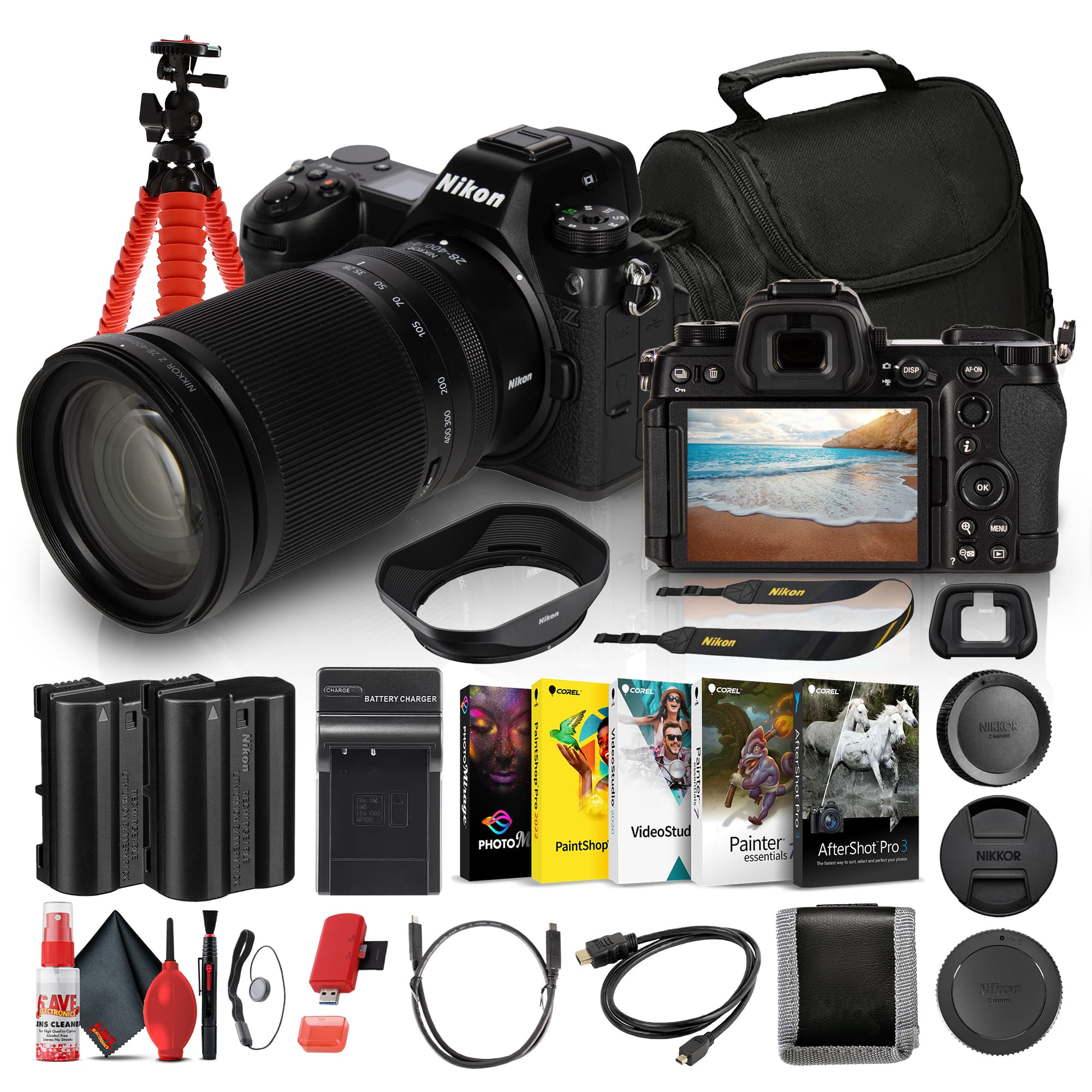
| Included Lens | NIKKOR Z 28–400mm f/4–8 VR |
| Bundle Accessories | Battery, charger, case, cleaning kit, tripod, filters, software |
What sets this bundle apart is the inclusion of the NIKKOR Z 28-400mm f/4-8 VR lens. This is an incredibly ambitious optic that covers an unprecedented 14.3x zoom range. In practical terms, this means you can go from wide-angle landscape shots to tight wildlife photography without changing lenses—a huge advantage when you’re traveling or working in changing conditions.
Real-World Performance & Feature Analysis
Design & Build Quality
The Z6 III feels substantial without being overly heavy—a perfect balance for all-day shooting. The grip is deep enough to feel secure with larger lenses, and button placement follows Nikon’s professional ergonomics. Having shot with this camera in both studio and outdoor environments, I appreciate the weather-sealing when unexpected rain appears during a landscape session.
The 4-axis tilting screen is more useful than I initially expected. It’s not the fully articulating screen some vloggers might prefer, but for photography-centric work, it provides just enough flexibility for high-angle and low-angle shots without adding bulk. The EVF is genuinely impressive—it’s one of those features you don’t fully appreciate until you’ve used it for extended periods. The 60fps refresh rate makes tracking fast action feel natural rather than laggy.
Performance in Real Use
Where the Z6 III truly shines is in its autofocus performance. The AI-powered subject detection isn’t just a gimmick—it makes a tangible difference when shooting events or wildlife. I tested it at a local soccer game, and the camera reliably tracked players even when they moved behind obstacles. The eye detection for both humans and animals is remarkably stable, though it can struggle with smaller animals at greater distances.
The partially-stacked sensor’s benefit becomes apparent in two key areas: rolling shutter and low-light performance. When panning quickly during video recording, the distortion is minimal compared to traditional sensors. In low-light situations up to ISO 6400, the camera maintains impressive detail with manageable noise. Beyond that, noise becomes more noticeable, but it’s still very usable for most applications.
The 28-400mm Lens: Versatility vs. Compromise
This lens is both the bundle’s greatest strength and its biggest compromise. The convenience of having such an enormous focal range cannot be overstated. During a recent hiking trip, I went from shooting wide landscapes at 28mm to capturing distant wildlife at 400mm without once changing lenses. The optical stabilization works well, allowing handheld shots at 400mm down to about 1/100s with careful technique.
However, the variable f/4-8 aperture means you’ll need good light for the telephoto end. In practice, this means shooting wildlife during golden hour becomes challenging unless you’re comfortable with higher ISOs. The lens is also noticeably softer at 400mm compared to prime telephoto lenses, though it’s more than adequate for most applications.
6K Video Capabilities
The video features are where the Z6 III punches above its weight class. The ability to shoot 6K N-RAW internally means you’re getting professional-grade video quality in a relatively compact package. I used it for a short documentary project, and the footage held up beautifully in color grading. The 4K/120p slow-motion is incredibly smooth, though there’s a slight crop factor to be aware of.
The practical consideration that many reviewers overlook is storage and workflow. 6K RAW files are massive—you’ll need fast CFexpress cards and substantial storage space. For serious video work, plan on investing in additional storage solutions beyond what’s included in the bundle.
Ease of Use
Nikon’s menu system has improved significantly with the Z series, and the Z6 III benefits from this refinement. The learning curve is manageable for those familiar with modern cameras, but beginners might feel overwhelmed initially. The custom function buttons are invaluable—I set one for eye-detection toggle and another for focus peaking, which streamlined my workflow considerably.
The touchscreen interface is responsive and intuitive. Being able to tap to focus during video recording is particularly useful for solo operators. The inclusion of the Corel software suite helps bridge the gap for those new to professional editing, though experienced users will likely prefer their existing workflows.
Pros & Cons
Pros:
- Exceptional autofocus performance that reliably tracks subjects in various conditions
- Versatile lens coverage eliminates the need for multiple lens changes
- Professional video capabilities that rival much more expensive cameras
- Excellent build quality with weather-sealing for outdoor use
- Comprehensive bundle includes most accessories needed to start shooting immediately
Cons:
- Variable aperture lens limits low-light performance at telephoto ranges
- Some bundle accessories feel like generic additions rather than quality matches for the camera
- Steep learning curve for photographers new to advanced camera systems
- Significant storage requirements for 6K video workflows
- Battery life can be limiting for extended video recording sessions
Comparison & Alternatives
Cheaper Alternative: Sony A7 IV with Kit Lens
The Sony A7 IV remains a strong competitor at around $2,500 with a standard zoom lens. Where it differs significantly: the Sony uses a traditional 33MP sensor without the stacked architecture, meaning you’ll notice more rolling shutter in video and slightly slower autofocus response. However, Sony’s lens ecosystem is more mature, and the camera excels at hybrid shooting with excellent video features. Choose the A7 IV if: you prioritize lens selection availability or need a more budget-friendly option.
Premium Alternative: Nikon Z8 with Separate Lenses
For around $1,000 more, the Nikon Z8 offers flagship performance with a fully-stacked sensor, higher resolution, and more professional video features. However, you’d still need to invest in lenses separately, bringing the total cost significantly higher. Choose the Z8 if: you need the absolute best performance and don’t mind assembling your kit piece by piece.
Direct Competitor: Canon R6 Mark II
The Canon R6 Mark II sits at a similar price point and offers comparable hybrid capabilities. The Canon excels at fast-action photography with excellent subject tracking, but it can’t match the Z6 III’s 6K video capabilities. The choice often comes down to ecosystem preference and whether video resolution is a priority.
Buying Guide / Who Should Buy
Best for Beginners
Surprisingly, this bundle can work for dedicated beginners who are serious about learning photography and video. The comprehensive accessory package means you can start shooting immediately without additional purchases. However, the learning curve is substantial—be prepared to invest time in understanding the camera’s capabilities.
Best for Professionals
For working professionals, the Z6 III makes an excellent second body or primary camera for those who don’t need the absolute top-tier performance of the Z8/Z9. The video capabilities are sufficient for most commercial work, and the autofocus reliability means you can trust it in paid shooting situations.
Not Recommended For
Budget-conscious photographers: If $3,398 stretches your budget too thin, consider starting with a more basic kit and building your system gradually.
Specialized sports/wildlife shooters: While the 28-400mm lens is versatile, professionals in these fields will likely prefer faster prime lenses for optimal performance.
Those deeply invested in other systems: Unless you’re specifically looking to switch systems, the cost of changing ecosystems may not be justified.
FAQ
Is the Nikon Z6 III bundle worth $3,398?
For hybrid shooters who need both stills and video capabilities, yes. The value comes from the camera’s performance combined with the versatile lens and useful accessories. If you were to purchase these items separately, you’d likely spend more.
How does the 28-400mm lens perform in low light?
It’s serviceable at wider focal lengths but challenging at 400mm where the aperture reaches f/8. You’ll need good light or higher ISO settings for telephoto work in dim conditions.
Can the Z6 III replace a dedicated video camera?
For most independent filmmakers and content creators, absolutely. The 6K RAW capabilities are professional-grade. However, for productions requiring unlimited recording time or specialized video features, you might still need a dedicated cinema camera.
How does the autofocus compare to Sony and Canon?
The Z6 III’s AF is competitive with both systems. It particularly excels at subject recognition and tracking, though Sony still has a slight edge in eye-AF reliability for video.
What’s the real advantage of the partially-stacked sensor?
Faster readout speeds mean less rolling shutter in video and more reliable autofocus tracking in continuous shooting modes. It’s a tangible improvement over traditional sensors.
Are the bundle accessories high quality?
Mixed bag. The additional battery and cleaning kit are useful, but the tripod and filters are basic. Serious photographers will likely upgrade these over time.
Final verdict: The Nikon Z6 III bundle represents one of the most compelling packages for hybrid shooters in today’s market. It’s not perfect—no camera is—but it delivers professional performance where it matters most. If your work demands versatility and quality across both photography and videography, this bundle deserves serious consideration.
 Insignia Apple Watch Magnetic Charging Cable 4 Foot USB
  CASEMATIX Hard Shell Waterproof Travel Case for Garmin GPS