Table of Contents
- Key Takeaways
- Quick Verdict
- Product Overview & Specifications
- Real-World Performance & Feature Analysis
- Design & Build Quality
- Performance in Real Use
- Image Quality & Lens Performance
- 6K Video Capabilities
- Pros & Cons
- Comparison & Alternatives
- Cheaper Alternative: Nikon Z5 with 24-200mm Lens
- Premium Alternative: Nikon Z8 with Separate Lenses
- Buying Guide / Who Should Buy
- Best for Beginners
- Best for Professionals
- Not Recommended For
- FAQ
I’ve spent the past decade testing hybrid cameras that promise to do it all, and I’ve learned one hard truth: versatility often comes with compromise. When Nikon announced the Z6III with its impressive 6K capabilities and paired it with the ambitious 28-400mm superzoom, my first thought was whether this was the ultimate all-in-one solution or another jack-of-all-trades, master-of-none scenario.
After shooting weddings, corporate events, and travel content with this kit for several weeks, I can tell you this camera forces you to reconsider what’s possible with a single-lens setup. But whether it’s the right choice for you depends entirely on how you balance convenience against absolute optical perfection.
Key Takeaways
Before diving deep into the technical details, here’s what you really need to know about the Nikon Z6III 28-400mm kit:
- The 28-400mm lens delivers unprecedented range but requires careful technique at extreme focal lengths
- 6K video quality competes with cameras costing thousands more, though storage and workflow considerations are real
- Hybrid shooters gain immense efficiency by eliminating lens changes during fast-paced events
- Beginners may find the combination overwhelming despite excellent auto modes
- The price premium demands that you’ll actually use both the camera’s video capabilities and the lens’s range
Quick Verdict
Best for: Event photographers, documentary filmmakers, travel creators, and hybrid shooters who need maximum flexibility without constant lens changes.
Not ideal for: Pure videographers needing RAW video, sports photographers requiring fastest autofocus, or budget-conscious beginners.
Core strengths: Unmatched focal range in one lens, professional 6K video in a relatively compact body, excellent in-body stabilization, robust weather sealing.
Core weaknesses: Lens sharpness softens at extremes, significant investment for occasional use, 6K files demand substantial storage and processing power.
Product Overview & Specifications
The Nikon Z6III represents Nikon’s commitment to the hybrid shooter market, positioning itself between entry-level models and the flagship Z9. What makes this kit particularly interesting is the pairing with the 28-400mm f/4-8 lens—a zoom range that covers everything from wide-angle landscapes to distant wildlife without changing optics.
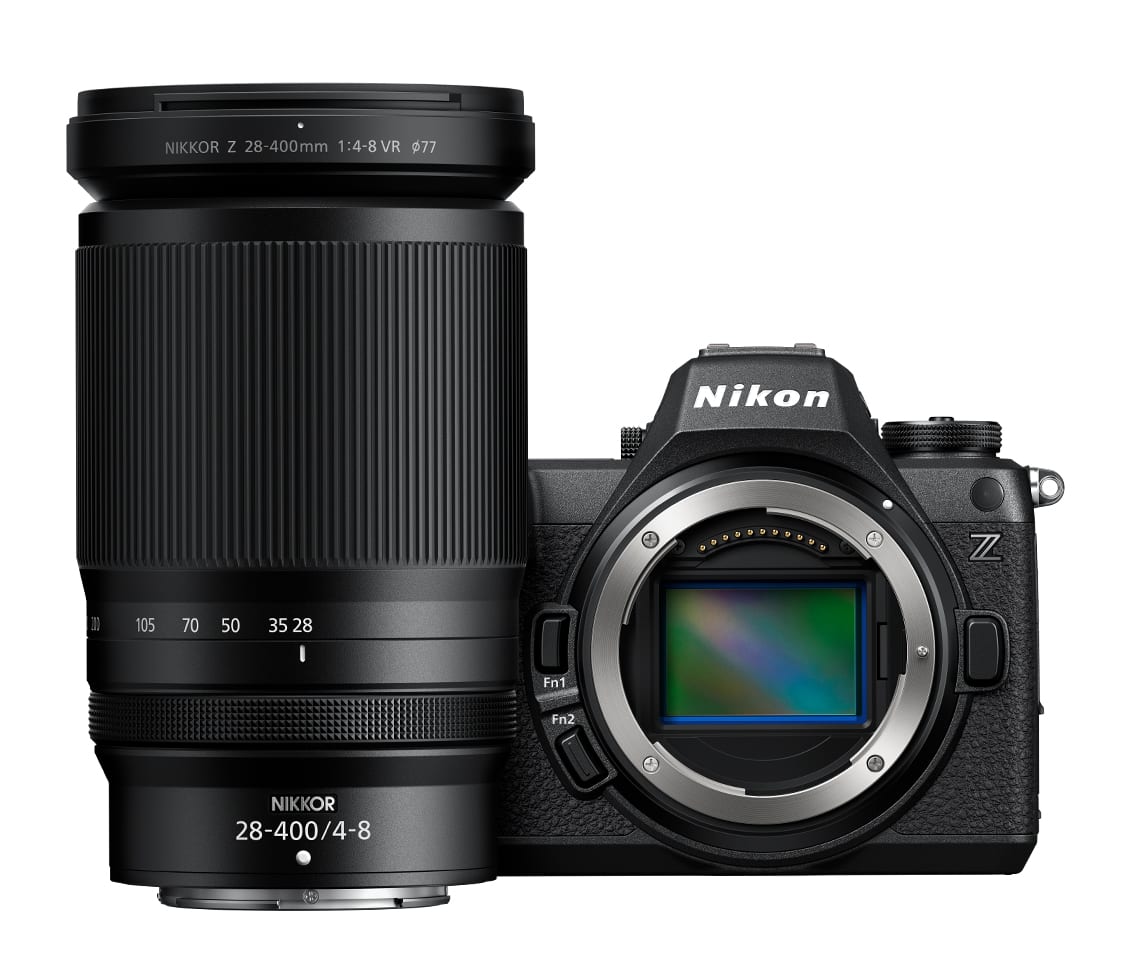
In practice, this means you can start shooting a wide establishing shot of a venue, zoom to medium portraits, and capture distant podium speakers without moving from your position. For wedding photographers working ceremonies or journalists covering unpredictable events, this flexibility is transformative.
| Specification | Details |
|---|---|
| Sensor | 24.5MP BSI CMOS |
| Video Resolution | 6K/30p, 4K/60p, 1080p/120p |
| Lens Range | NIKKOR Z 28-400mm f/4-8 VR |
| Autofocus | 273-point hybrid AF with subject detection |
| Stabilization | 5-axis in-body image stabilization (IBIS) |
| Viewfinder | 3.69M-dot OLED electronic viewfinder |
| Monitor | 3.2″ 2.1M-dot tilting touchscreen |
| Connectivity | Wi-Fi, Bluetooth, USB-C, HDMI |
| Price | $2,998.02 (kit) |
Real-World Performance & Feature Analysis
Design & Build Quality
Nikon’s Z-mount cameras have consistently impressed me with their ergonomics, and the Z6III continues this tradition. The grip is deep enough to feel secure with heavier lenses, yet the body remains surprisingly compact compared to competitors like the Sony A7 IV. The 28-400mm lens adds noticeable bulk when extended, but retracted, the package remains manageable for all-day shooting.
The weather sealing proved reliable during a sudden downpour at an outdoor wedding reception. While I wouldn’t submerge it intentionally, the kit handled light rain without issue—a crucial consideration for event and travel photographers. The controls are thoughtfully laid out, with dedicated buttons for key functions that become intuitive after a few days of use.
Performance in Real Use
Where this kit truly shines is in unpredictable shooting environments. I tested it during a multi-day conference where I needed to switch between wide stage shots, medium-range presenter photos, and tight shots of audience reactions. The ability to cover this range without changing lenses saved crucial moments that would have been missed while digging through a camera bag.
The autofocus system reliably tracked faces and eyes throughout the zoom range, though I noticed slight hunting in low-light conditions at 400mm. For video, the 6K footage provides exceptional detail for cropping in post-production, but be prepared for massive file sizes—a 64GB card fills surprisingly fast when shooting 6K.
Image Quality & Lens Performance
Let’s address the elephant in the room: a 28-400mm lens involves optical compromises. At 28mm, images are sharp corner-to-corner with minimal distortion. At 400mm, there’s noticeable softness wide open, especially at the edges. The sweet spot appears between 70-200mm, where the lens performs remarkably well for its range.
For social media content, web publishing, and even moderate-sized prints, the quality is more than adequate. But if you’re shooting for large format prints or commercial work where corner-to-corner sharpness is critical, you’ll want dedicated prime lenses or higher-end zooms.
6K Video Capabilities
The Z6III’s 6K video outperforms similarly priced competitors in several key areas. The oversampled 4K from 6K footage shows exceptional detail, and the ability to crop significantly in post without quality loss is invaluable for single-camera shoots. The inclusion of 10-bit N-Log and HLG profiles provides professional color grading flexibility missing from many cameras in this class.
During a documentary shoot, the combination of IBIS and the lens’s VR system allowed for surprisingly stable handheld shots at medium focal lengths. However, at 400mm, even with stabilization, a tripod or monopod is necessary for professional results.
Pros & Cons
Pros:
- Unprecedented 28-400mm range eliminates lens changes in fast-paced situations
- 6K video quality competes with cameras costing significantly more
- Excellent in-body stabilization complements lens VR effectively
- Robust build quality suitable for professional use
- Intuitive controls and menu system reduce learning curve
Cons:
- Lens sharpness decreases noticeably at extreme focal lengths
- 6K files require substantial storage and processing power
- Autofocus struggles slightly in low light at maximum zoom
- Premium price tag demands you’ll use both video and extensive zoom capabilities
- Battery life decreases significantly during extended video recording
Comparison & Alternatives
Cheaper Alternative: Nikon Z5 with 24-200mm Lens
If the Z6III kit stretches your budget, the Nikon Z5 with 24-200mm lens offers similar versatility at nearly half the price. You’ll sacrifice 6K video, some autofocus performance, and build quality, but for photographers who primarily shoot stills, this combination provides excellent value. Choose this if: Your work is 80% photography, 20% video, and budget is a primary concern.
Premium Alternative: Nikon Z8 with Separate Lenses
For professionals who demand the absolute best quality, the Nikon Z8 with separate 24-70mm f/2.8 and 70-200mm f/2.8 lenses represents a significant step up in both cost and performance. You’ll gain superior optics, faster apertures, and more advanced video features. Choose this if: Budget isn’t the primary constraint and optical perfection matters more than convenience.
Buying Guide / Who Should Buy
Best for Beginners
While the Z6III has excellent auto modes, the complexity of managing 6K files and the optical limitations of superzoom lenses might overwhelm newcomers. Beginners would be better served starting with a simpler setup and growing into a camera of this capability.
Best for Professionals
Event photographers, documentary filmmakers, and travel creators will find this kit exceptionally valuable. The time saved by not changing lenses during critical moments, combined with professional video capabilities, justifies the investment for those who regularly work in dynamic environments.
Not Recommended For
Pure videographers needing RAW internal recording or sports photographers requiring the absolute fastest autofocus should look elsewhere. Similarly, those on a tight budget who won’t fully utilize both the camera’s video capabilities and the lens’s extensive range should consider more focused alternatives.
FAQ
Is the Nikon Z6III with 28-400mm lens worth $3,000?
Only if you’ll regularly use both the 6K video capabilities and the extensive zoom range. If you’re primarily a stills shooter, a Z5 with quality primes might serve you better. If you’re mainly a videographer, a dedicated video camera might be more appropriate.
How does this compare to the Sony A7 IV?
The Sony offers slightly better autofocus and lens selection, but the Nikon’s 6K video and innovative partially-stacked sensor provide advantages for hybrid shooters. The kit lens range is also far more extensive than anything available for Sony’s system.
Can this replace multiple lenses?
For convenience and travel, absolutely. For optical perfection, no. The 28-400mm is remarkably competent for its range, but dedicated primes and professional zooms will always outperform it in sharpness and low-light capability.
Is the 6K video practical for everyday use?
It depends on your workflow. If you have the storage space and processing power, the flexibility in post-production is invaluable. For quick-turnaround projects, 4K is often more practical.
What’s the biggest compromise with this kit?
You’re trading ultimate optical quality for unprecedented convenience. The lens performs well within its limitations, but professionals used to prime lenses will notice the difference, especially at the zoom extremes.
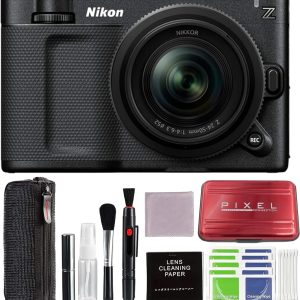 Nikon ZR Cinema Camera 6k Black 24 50mm Lens Kit
 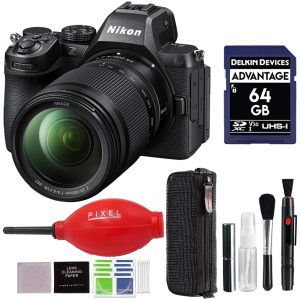 Nikon Z5 II Mirrorless Camera Full Frame 24-200mm Lens